The Portal at Moritzplatz
Clubbing is one of the most sophisticated things humans do. We just pretend it isn’t.
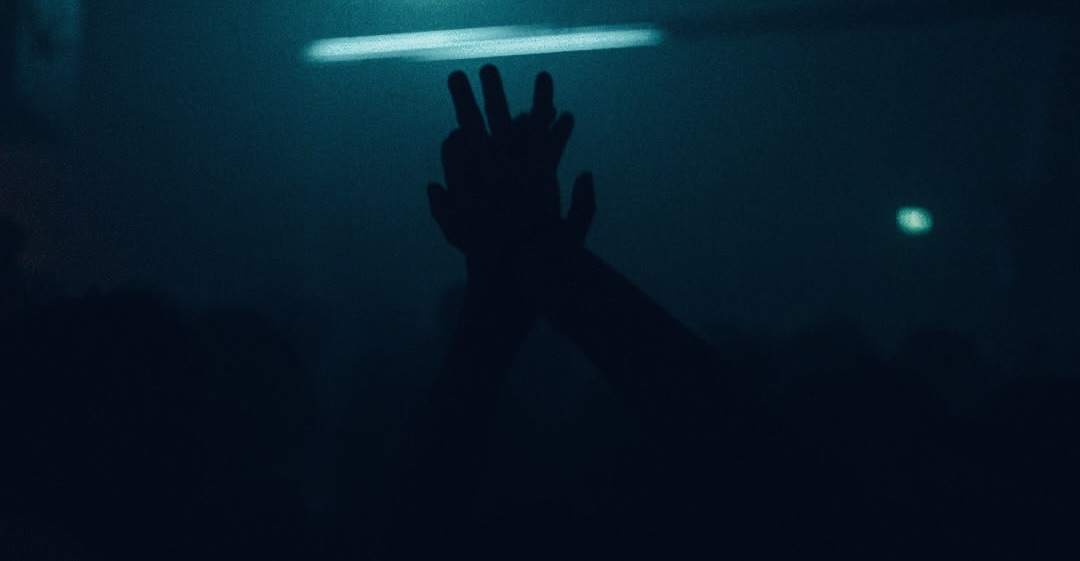
Original artwork by Ryan Taylor
Clubbing is one of the most sophisticated things humans do. We just pretend it isn’t.
I mean, let’s just think about it for a second. A room full of strangers agrees, mostly without ever speaking to each other, to move, in sync, to music, on the same invisible grid. A DJ coordinates all of that, for hours, with two decks and a mixer. Your body stops arguing with your brain. Your identity stops feeling like a project. Time becomes elastic, then disappears entirely.
And yes: I know how I sound. Like I’ve mistaken disco for religious experience. Well, dignity be damned; my body keeps confirming it.
I have been writing this article since December. Waiting for today, when I will go down to Prince Charles in Moritzplatz and listen to Horse Meat Disco at Berlin CSD. The hairs on my arms are refusing to behave. They haven’t gone down once.
This is what the portal does.
Berlin, first doorway
It starts before the club. It starts at the airport.
Berlin hits me the minute I’m back, as a physical sensation. Like an invitation I don’t have to RSVP to. The city doesn’t flatter you, it doesn’t perform for you, it doesn’t do the little polite dance other places do where they try to be liked.
It just is. And somehow that’s the kindest thing it could do.
The truth is, the club doesn’t work without the city. Berlin is the house. The club is the room. I have no choice, none whatsoever, but to walk through the door.
It’s inevitability. It’s gravity. It’s speical.
Anyway, we’d better get ready.
The flat as launchpad
You see, getting ready is not a chore. It’s the dress rehearsal.
We’re at my flat or a friend’s. Music’s already on. Outfits appear. Drinks appear. Someone is laughing so hard they’re basically wheezing, and it doesn’t even matter what they’re laughing at because the laughter is enough all on its own.
Smiling faces. Is there anything better?
There’s a particular kind of openness that shows up in these moments that I don’t always get in normal life. A loosening. A dropping of guard. Like the part of me that usually keeps one eye on the exit has decided to take the afternoon off.
If you’ve got ADHD, you already know what’s happening here. Anticipation is rocket fuel. It’s dopamine with a countdown timer. The ramp is half the pleasure. The “we’re going to do the thing” energy starts pulling you forward long before the thing begins.
You can feel the room you’re not in yet.
So we head to the door.
A little stage fright
We tumble out. Lock up. Head for the U-Bahn.
And right on cue, I get nervous.
Anxiety? No. Dread? Absolutely not. But it is, undoubtedly, a little flutter.
That exact feeling I get before I walk on stage to present something. Heart rate up. A little tightness in the belly. And here we go.
Which is ridiculous. This is meant to be the thing I love more than anything. Why would I feel stage fright before walking into my favourite room on Earth?
Because my body doesn’t clock what the event is. It cares what it means.
This night is allowed to be brilliant. It’s allowed to be the thing that resets me. And because it matters, my senses start scanning. A cursory check before they let me go feral.
I notice it. I carry it.
But not as a problem, rather as proof there are stakes. In the best possible way.
Then we clamber onto the U-Bahn.
The carriage between worlds
We’re loud. We’re probably annoying. The sun’s out. It’s mid-afternoon, because this thing starts mid-afternoon and runs until the last person finally admits they’re a mammal who needs sleep.
So the carriage is a mix: people doing errands, people quietly trying to be alone, people heading somewhere normal…and then us.
A moving pocket of intent.
Sunglasses, outfits, a beer being passed around like it’s a talking stick.
And here’s the first hint of club logic: we’re still in public space, but we’re already behaving like the rules have softened.
Not numb. Not catatonic. Invincible.
The beat isn’t even in the room, yet our bodies are already beat-matching the day to the night.
Then the stairs.
Moritzplatz
We come up from below and we’re suddenly overground again, the stairs spitting us out by the roundabout like a trapdoor.
And right there, right there, is one of my favourite Berlin idiosyncrasies: Planet Modular on the corner. People browsing design books and stationery and crafting materials as if they’re not a hundred metres away from the most joyful chaos you can participate in before Monday morning.
Berlin doesn’t separate things the way other places do. Club culture isn’t hidden behind velvet rope mythology. It can sit next to a design bookshop and across from a petrol station and nobody finds it weird.
It’s the whole city in one frame.
It’s just…Berlin.
And you can often hear it already. Bass. Faint but present. Like a heartbeat through concrete.
That’s when the short walk, just a single block, turns mad.
We start piggybacking, which is deeply stupid because Berlin pavements are mostly cobbled, so you’re effectively giving your mate free spinal alignment. We laugh anyway. We never learn.
Sometimes we get to the entrance and the queue isn’t shifting yet. So we sit on the curb, finishing our beers, but at some point the beer has multiplied. We’ve gone from “one passed around” to “one each” and nobody has any idea how it happened.
We do the ritual. We talk “game plan” even though there’s naff all need for a plan.
We’ve done this before. We know the rules. We know we’ll get in.
But it’s the last little moment of consent before you cross over.
The final: are we giving ourselves permission to do this?
We so are.
Then let it begin.
The Prince Charles entrance
Prince Charles has an entrance that feels like you’re walking into the basement car park of a hotel; a covered driveway that goes down, and forward, until it blooms into an open-air courtyard.
Then the queue splits into three: tickets, no tickets, guest list. Like a last minute bureaucratic ritual.
On your right: the door to coat check.
Straight ahead, across the courtyard: the terrace behind a slatted half-door that shows you just enough. Enough bodies, enough movement, enough to confirm “yep, we’re definitely in the right place”, even though we already know we are.
It’s perfect. A tease. A promise.
And yes, it’s called Prince Charles, which is objectively funny in Berlin: a city that has never once behaved like it cares about British monarchy. I have no idea why it’s called that. I’ve never googled it. The brand designer inside me yearns to know, yet the mystery is perfect.
Some questions are better left as lore.
And then there’s the guy running the queue. The one keeping the whole thing from losing its collective mind.
He always clocks me. Always holds eye contact for a beat too long.
We smile. We flirt. We do the tiny dance of saying lovely things without having to say anything.
Look, he might do that with every person in the queue. He probably does. He should. It’s good for morale.
But it’s also the first real moment where that little nervousness loosens, because it reminds me: this is our place with our people. And unlike a lot of queer experiences, the people who run this place actually care. They look after us. They understand the culture is all of us: the staff, the door, the DJs, the whole kit and caboodle.
The bar staff are magic. Smiley. Affectionate. Running around on their feet all day and still treating everyone like they’re welcome.
Then tickets are scanned, and we’re in.
The token, the thump, and the grid
This is where the club starts leaking into your body.
Coat check.
You’re trying to do a very un-clubby task: standing still, being patient. All the while, the bass hits you through a wall like it’s tapping on your chest.
Up close: a little token in your palm. Pulled back: two hundred people starting to sync to the same drum.
By the time I’m holding the token, coat gone, my body’s already found the grid. It’s there before the rest of me.
Courtyard again.
Slatted door. Half glimpse in. One final smile at each other.
A nod from all of us.
Then through.
The half-door switch
Here is the moment I can’t make sound less dramatic than it is: the second I step onto the terrace, the nervousness evaporates.
Not gradually. Not politely. It just disappears, like it was never there in the first place.
I smile. Properly, openly, with no irony. And I mouth “thank you” to…I don’t know. The room. The day. The accident of being alive at the same time as this.
And before you think, alright mate, calm down: yes. I know how this sounds.
But here’s the bit that matters: the smile isn’t a performance. It’s a reflex. It’s my body clocking safety and going, finally. The knot behind my ribs unclenches.
Sometimes we go to the bar. Sometimes we don’t. Mostly, we head straight in and allow the crowd to wrap around us.
And then I start dancing. Not a polite shuffle. Not a “little sway while I check my phone”.
I mean the dance I do.
The one I’ve been quietly building my whole life. Not professional, nor choreographed. But specific. A style that fits nu-disco and syncopated rhythm like a key fits a lock. Enough technique to feel real, enough looseness to feel alive.
Gay culture has a weird relationship with fitting in. We pretend it doesn’t, but it does. There’s always an invisible syllabus. An unspoken exam. Somebody with a metaphorical clipboard.
I think I solved my own version of it by deciding that I will claim the right to be here by being good at the thing we came here to do.
Not showing off. Not dominating. Just…belonging without asking.
And so I dance the dance I do.
People smile. I smile back. My friends chat around me. Some dance too. We spot people. We give each other hugs. We laugh. And then Horse Meat Disco mix into the next track for the first time since we arrived.
It doesn’t matter what the tracks are at this point. It’s the transition itself. The moment the music changes without stopping, something stops and another thing starts. In me. In the music. On the terrace.
And yes, despite me understanding what just happened, despite me having experienced it a million times before, I cry.
A little. On cue. Every time.
It’s not sadness, oh no. It’s release.
And then—. And then for half a second, there’s nothing to explain. Just my body finding its space, like it’s been waiting months to do it. It has been waiting months to do it.
This is what the room does.
The empty pool
Prince Charles splits in two: terrace on the left, interior on the right. How they connect changes depending on the night, which is all part of the magic, but the interior always hits me the same way because of one detail that is so good it borders on obscene.
The dancefloor is a disused swimming pool.
Literally. The floor is set into the ground. You dance at the bottom of the pool. There are old pool steps at either side. And a ramp at one end that once led into the shallows.
It feels like stepping through a stargate. A portal.
And it creates a call-and-response you can’t fake: people dancing in the bottom of the pool, people dancing around the edge, faces looking at each other as two parts of the same thing. When the room peaks, you can see the wave travel through us, not just feel it.
Sometimes they set the DJ booth right in the doorway between outside and in—so Horse Meat Disco are DJing both ways at once—pushing music out to the terrace and pulling it back into the pool.
Which is, honestly…bloody genius.
Then the moment happens.
Horse Meat Disco
A good DJ set is not one continuous level. Not if the DJ knows what they’re doing.
It’s peaks and troughs. Rise and rise and fall and rise again. Tension and release like a heartbeat.
Horse Meat Disco are masters of that. They’re not just playing tracks, they’re steering attention. Conducting the room. Confirming what you expect just enough to keep you safe, then violating it in the best possible way.
They don’t play at you. They play with you.
Their insane craftsmanship never gets old.
Right at the apex, when the room is already leaning forward, they drop something familiar. A riff. A vocal. A little slice of recognition.
The crowd loses its goddamn mind.
And this is where scale matters, because by now, everything is happening at once:
In your body: muscles working, lungs doing their thing, sweat and stamina and vibration. In your head, the self goes quiet. Nothing solved, just temporarily unnecessary. And in the room, the crowd locks. Hundreds of individuals behaving like one organism.
And here’s a little ADHD truth: in normal life, me and my brain are often in a permanent negotiation. Too loud, too much, too fast, too emotional, not enough filters.
In here. In this place. When Horse Meat Disco do what they do, me and my head stop fighting.
We collaborate.
The intensity becomes useful. The emotional flood is wanted. Self-expression becomes the point, not the problem. The thing that usually scrambles me turns into rocket fuel.
That’s why it goes off. That’s why it feels like relief. Why it is so intense I am literally shaking writing this.
Crowd reacts. Horse Meat Disco reacts. Crowd reacts harder. Horse Meat Disco take a bigger swing. Crowd becomes braver.
And when it washes over you like that, there is nothing that can be done but go with it.
To feel it. To be it. To never want it to end.
Release.
At last.
One song, two strangers
At some point, always, I’ll be in full “dancing my dance” mode and someone I’ve never met will end up dancing opposite me.
Not flirting necessarily. Not “a moment” in the cheesy way.
Just…appreciating.
We’re not exactly dancing together, but we are sharing the same pocket of time. Reacting to each other. Dancing for each other.
A smile. A wink. A little “yea, that”.
Maybe we say “you dance great” like it’s the most normal thing in the world to complement total strangers. Because here, it is.
And for the length of that song, we’ve created a world within the world. Two strangers unified by music, place, and mutual permission.
Briefly. Genuinely. It feels like we’re the only two people alive.
Then it’s gone. They dance away. The night continues. I rejoin my friends.
No names. No contact details. No “so what do you do?” admin.
Just a moment we’ll never forget.
Ten people, one cubicle
At some point you have to go to the toilet.
Which sounds normal until you remember we’re in this club, which means the toilets are not “restrooms” in any meaningful sense. They’re a humid parallel dimension. They’re so warm they feel personal, like the building is trying to hug you to death.
And everybody queues.
Which is, again, objectively funny, because we’ve already queued to get in, queued for the token, queued for the bar, and now, here we are, holding civilisation together by sheer collective will.
Very British, all that queueing. Maybe that’s why it’s called Prince Charles. Who knows.
You inch forward. You chat to the people in front and behind. You ask endless questions. You answer pointless questions. Someone passes a vape round like it’s community service.
And then, suddenly, there’s ten of you in a cubicle.
Nobody has met before. Nobody is acting like this is odd. Everyone takes a turn, like it’s the most normal group activity on Earth. Somebody cracks a joke. Somebody doesn’t get it. It’s explained again. Somebody laughs uncontrollably. The whole thing descends into recursive nonsense.
Someone points out, sincerely, that this is where we’re going to die.
The heat.
Then the door is cracked open, cold air hits your face like salvation, and you spill back out into the corridor, blinking, reconstituting your personality, remixing, finding your people again.
Back to it.
The drag show reset
Sometimes, late-afternoon, there’s a raised platform out on the terrace and a drag show erupts out of nowhere like the universe remembered it has a sense of humour.
And it does this brilliant thing: it knocks the head off the atmosphere for a moment. It catches itself and recalls something important.
It forces everyone to check in. To laugh. To clap. To remember we’re not just a mass of bodies chasing a peak. In this container, we’re a community that can pause, breathe, and be frivolous together.
It’s a reset button.
A pure moment where a different kind of something happens.
And then, as the applause dies away, the music pulls us back in.
Dusk
Later—either it’s dark or we’re getting there—the platform has somehow melted away. Nobody knows how. It’s just gone. The terrace shifts from “dancefloor in daylight” to “chill-out space where time stops behaving”.
Around the edges, up to the bar at the back, there are stepped platforms. People sit on them, above and behind each other, mingling, carefree of the social norms that exist everywhere but here.
And then this thing happens that I’ve never quite seen outside this place:
Our group sits down, and within minutes we’re intertwined with strangers. Not erotically, not pornographically. Just affectionately, physically, because the default setting in this room is trust.
An arm around someone you met two minutes ago. Someone cradled between someone else’s legs, laughing and joking and being. A bottle being passed around. Someone rolling a rolly. Laughing. Much. much laughter.
It sounds like it’s going somewhere, doesn’t it. It sounds like a story that ends with a fade to black.
But honestly, it isn’t that. It’s something gentler. Something rarer.
It’s a collective moment.
And here’s the thing. This softness didn’t arrive by accident.
A lot of us grew up learning to keep our hands to ourselves. Not because we wanted to, but because it was safer.
Even now, even in a city as generous as Berlin, some part of the body still expects a flinch.
In here, for a moment, it doesn’t. We get to practise being the version of ourselves that isn’t braced.
This is ours. And I’m so glad we’re sharing it.
I don’t want to call it therapy. That’s not quite right. But it is catharsis. It’s the body learning, briefly, that it can stop defending itself.
You can’t force this. This simply happens here.
This is what the room does.
The time is now
At some point the light turns to dark and back to light again. A whole day slips past. And while it’s happening, it feels like this will fill the rest of infinity. Like there is nothing else and this is what we’re doing until the end credits.
Then the music stops, we cheer, there’s one more track, we cheer again. Back and forth like somebody waking from sleep after a collective dream.
In the moment, the club expands. In memory, it compresses. Your brain doesn’t store every minute. It quickly creates chapters:
Moritzplatz stairs and that first bass thump. The slatted door tease. The cry when it started. The portal in the swimming pool. The cheer when thunder hits. The stranger who danced with you for one song. The terrace steps where everybody became real. Ten people, one cubicle, no notes.
Somewhere deep into the night, the grid stopped being something I danced to and became something I danced on. Which is a very poetic way of saying: my body finally shut up and did what it came here to do.
And then it’s done.
The portal closes.
The walk home
We always walk home.
Not because we’re virtuous. Because it’s part of re-entry. Because you need air and distance and a little time for your body to come back to Earth.
We pass Moritzplatz again, but we don’t go down into the bowels of the U-Bahn this time. Instead, we cross the roundabout and head on. Just beyond, the street splits in two.
Despite living here, if we’re going back to mine, I always choose the wrong street.
Every time.
And we all laugh. And it’s become its own stupid little ritual: the post-portal detour, like my brain needs one last tiny bit of chaos before it agrees to normality.
On the detour, there’s the “last Späti in town”, where we pick up supplies like we’re stocking a bunker: Club Mate, cigarettes, beers, stuff nobody knows who bought but it always comes from the ride, and crisps. Endless crisps.
We eat them all before we get back. Obviously.
At some point we stop and do another thing that makes no sense: we take a photo of our reflection in the window of whatever building we happen to be passing.
All arms around each other. Smudged glass. Streetlights. The worst framing you’ve ever seen.
We have hundreds of these photos. All of them are crap. Every single one looks like a paranormal sighting.
And yet we keep doing it. Partly because Berlin clubs have that unwritten rule where your phone stays out of the room, and it’s considered deeply tragic to forget.
This is our loophole. Our souvenir. Proof, without breaking the spell.
When I flew back to her, Berlin was big. Mythic. The idea of Berlin. The anticipation. The memory. The hope.
On the walk home, Berlin becomes small. Not small as in lesser, small as in detailed. Present tense. Zoomed all the way in. Cobblestones under tired feet. A Späti light humming. Quiet streets holding their breath. The city not asking me to explain myself.
The club has propelled me forward and glued me to her. I don’t need past experience or hopeful anticipation to get high anymore.
I’m not reaching. I’m not chasing. I’m just…here.
Home.
So. Clubbing is one of the most sophisticated things humans do. Not because it’s cool. Because it’s a container where the body, the self, and the crowd briefly agree to do a thing and to be a thing, together.
It’s the closest to truth I’ll ever get.
Then you walk home through Berlin like nothing happened. Except your skin remembers.
And if you’re reading this thinking I’ve built a personal religion out of a half-door, a drained swimming pool, the best DJs in the world, and a queue man with excellent eye contact:
Fair. I have. All the details add up.
Coat check token in my pocket. Stamp half-faded on my wrist. The bass still chewing at my chest.
And the quietest thought in the world:
What a thing to have had.